


Industry Uplift Program Publications
Find a longer list of publications to complement the program
Publications on wartime food production, soldier feedback and and industry programs.
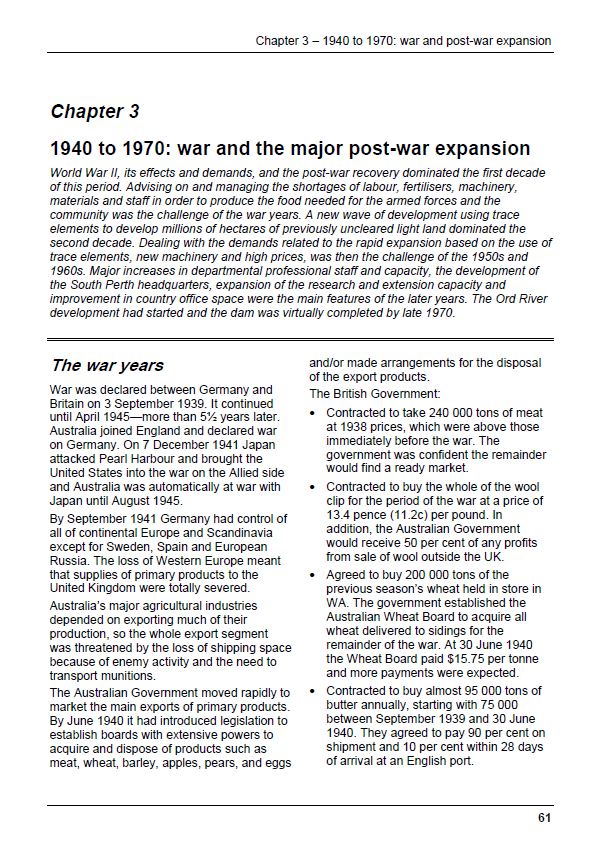
In Response to Need Chapter 3: 1940 to 1970: Details the changes in the agricultural production in Western Australia due to the war effect. From rationing of fuel, fertilizer and human resources to effects on harvests, export and quality issues. World War II, its effects and demands, and the post-war recovery dominated the first decade of this period. .
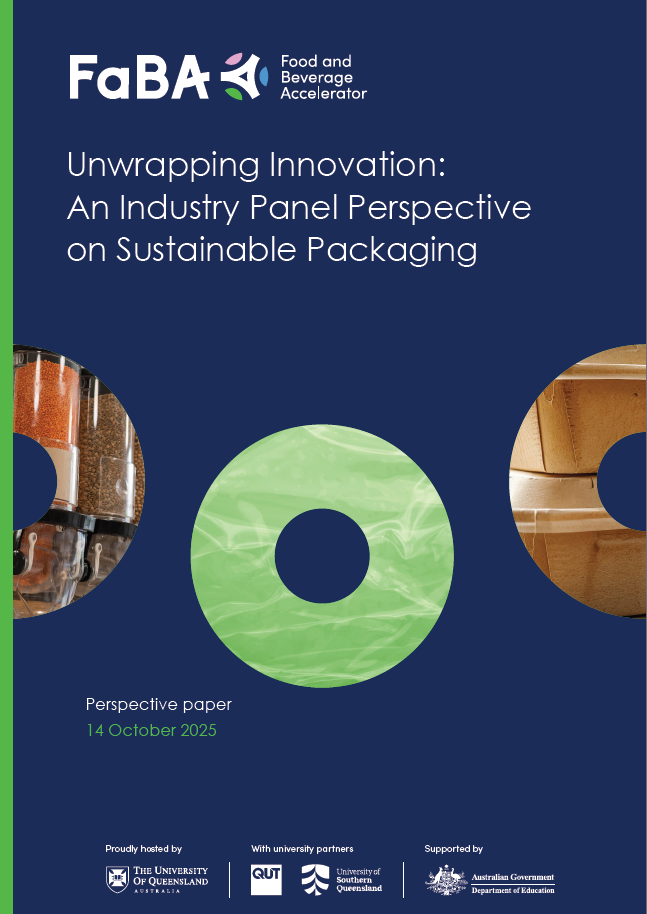
‘Unwrapping Innovation’, a bite-sized summary that captures critical conversations shaping the future of sustainable packaging for the nation’s F&B sector. The report includes insights from an industry panel chaired at the launch of FaBA’s Sustainable Packaging Trends Report. It brings together perspectives from leaders tackling one of the sector’s most pressing challenges: how to move beyond good intentions and into action.
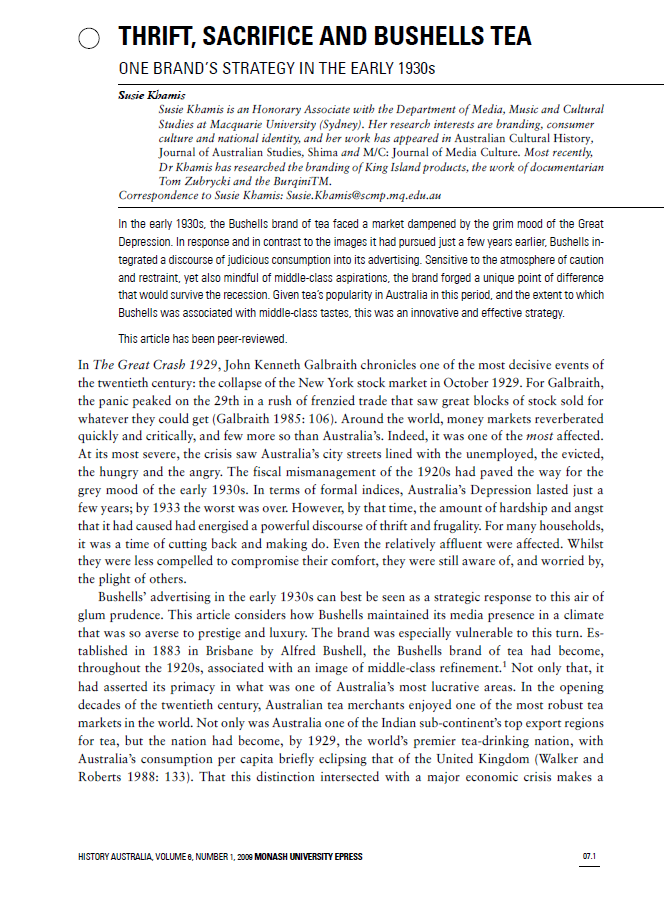
Susie Khamis writes that in the early 1930s, the Bushells brand of tea faced a market dampened by the grim mood of the Great Depression. In response and in contrast to the images it had pursued just a few years earlier, Bushells integrated a discourse of judicious consumption into its advertising. Sensitive to the atmosphere of caution and restraint, yet also mindful of middle-class aspirations, the brand forged a unique point of difference that would survive the recession.
The objective of this two-day course is to familiarise Defence and Industry participants with the requirements of the Australian Industrial Capability (AIC) contractual framework across the procurement life cycle. The course will address the key concepts of the ASDEFCON contracting templates relevant to AIC. This publication is not a substitute for specialist legal and contracting advice and users should obtain advice where appropriate.
This article examines how the war in Ukraine has highlighted the growing connection between food security and national security. It argues that modern defence planning can no longer focus solely on military capability, as disruptions to global food systems, supply chains, and agricultural production can have strategic consequences far beyond the battlefield. The paper encourages a broader view of preparedness, recognising that resilient food systems are an essential component of national resilience.
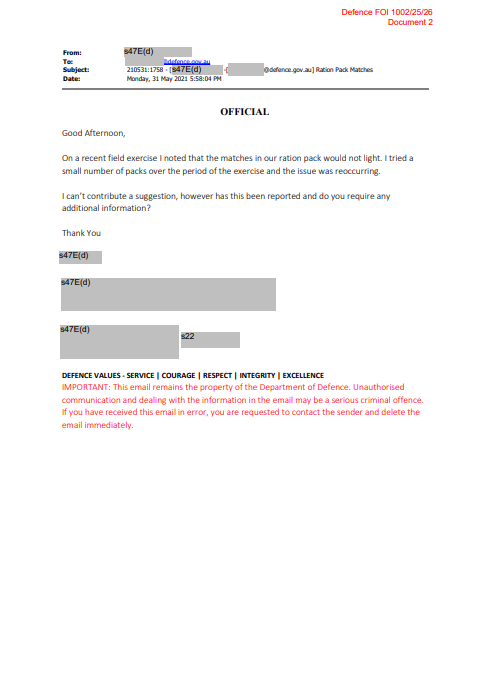
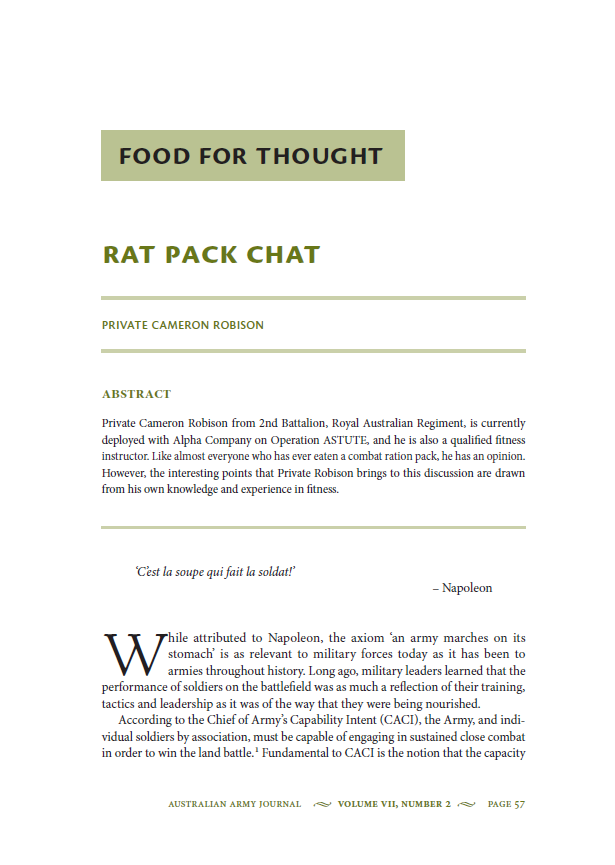
This Defence document captures feedback from Australian Defence Force personnel on Combat Ration Packs (CRPs), providing valuable insights into what works, what doesn’t, and where improvements can be made. The feedback highlights the importance of taste, nutrition, variety, packaging, and practicality in operational environments, demonstrating that effective ration design is driven not only by food science, but by the real-world experiences of the soldiers who rely on them.
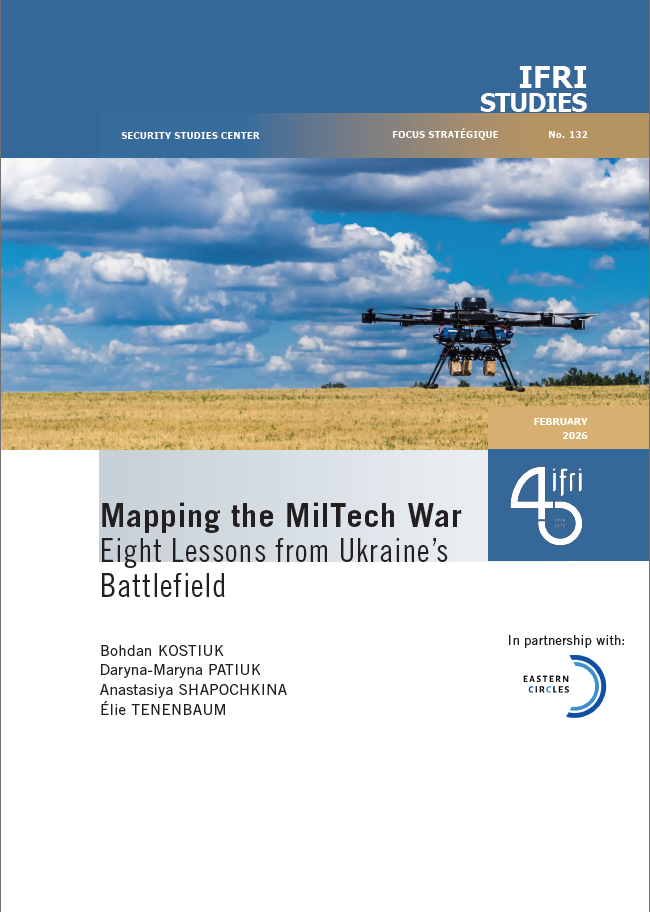
The report examines technological lessons from the war in Ukraine, showing how drones, electronic warfare, AI, software integration and space-based systems have reshaped modern warfare. Success now depends on adaptable, networked technologies and resilient industrial ecosystems rather than traditional platforms.
Australia’s food and beverage (F&B) manufacturers were set targets that all packaging they use is 100% reusable, recyclable or compostable by 2025. Despite policy implementation delays, actions to this end continue, including phasing out problematic and unnecessary single-use plastics packaging. A major risk exists that as F&B producers move to new packaging formats, they will lose shelf life, create undesirable product attributes, and in the process increase food loss and waste (FLW). This project is aimed to assist SME firms to transition to sustainable packaging
Private Cameron Robison states, that according to the Chief of Army’s Capability Intent (CACI), the Army, and individual soldiers by association, must be capable of engaging in sustained close combat in order to win the land battle. Fundamental to CACI is the notion that the capacity of Australian Army soldiers to engage in close combat must be both ‘optimised’ and ‘sustainable’. While the provision of all classes of supply is important to optimising and sustaining the performance of soldiers engaged in close combat, the provision of sustenance items, namely food and water, is vital to enhancing the capacity of soldiers to achieve enduring tactical success on the battlefield.
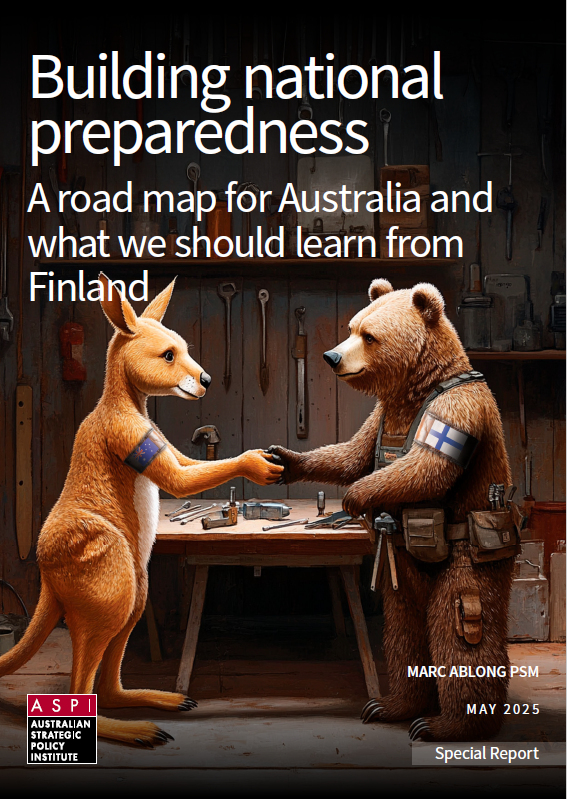
This report explores how Australia can strengthen its national resilience by adopting elements of Finland’s Total Defence approach, where government, industry, and communities all play a role in preparedness. It highlights the importance of resilient supply chains, food security, critical infrastructure, and public-private collaboration in responding to future crises, disruptions, and national security challenges.
This study examines how the COVID-19 pandemic disrupted military food supply chains and highlights the importance of resilience in sustaining Defence operations during a crisis. Using the Polish military as a case study, it demonstrates how food systems had to rapidly adapt to changing conditions, quarantine requirements, and supply chain disruptions. The paper reinforces a key lesson that resilient food supply chains are not just a logistics issue,they are a critical component of operational readiness, national resilience, and security.
This podcast explores the fascinating science behind military ration packs through the experiences of former Defence food scientist Ross Coad. It highlights how ration development extends far beyond food, requiring careful consideration of nutrition, weight, shelf life, packaging, durability, and soldier acceptance. The discussion provides a valuable insight into how science, industry, and user feedback combine to create food systems capable of supporting military personnel in some of the world's most demanding environments.